Every Montgomery County listing agreement carries a paragraph that has nothing to do with square footage, school boundaries, or curb appeal. It requires a radon test before settlement, on every detached and attached single-family home, full stop. Cross the District line into Georgetown or Palisades and that paragraph disappears. There is no equivalent requirement in Washington, D.C., and none in Northern Virginia. A seller or buyer who has only ever transacted in the District can read a Bethesda contract twice and still miss it, because nothing in their prior experience taught them to look for it.
That gap matters more than it sounds. Bethesda is currently one of the faster-moving markets in the region, and a step that takes real calendar time tends to surface exactly when nobody wants a delay: right before closing.
What the Rule Actually Requires
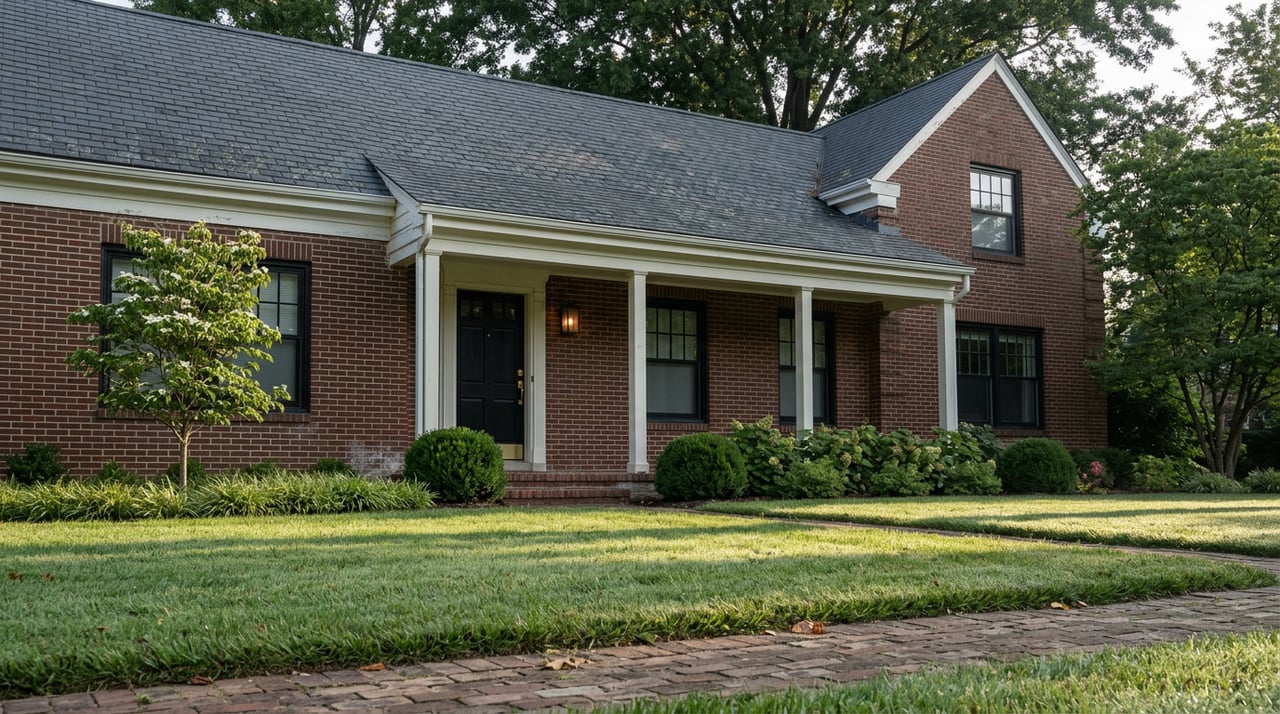
Montgomery County Code Section 40-13C has required radon testing before the sale of a single-family home since October 1, 2016. The county defines "single-family home" as a detached or attached residential building, which covers Bethesda's colonials, Cape Cods, and rowhouses alike. A unit inside a condominium or a cooperative housing corporation does not count. That single sentence in the code splits Bethesda's housing stock into two very different paperwork tracks, a point worth returning to below.
The test itself has to be performed within one year of the settlement date. Either the buyer or the seller can order it, but the code does not let the obligation disappear if nobody volunteers. If a seller offers the buyer the chance to test and the buyer declines, the seller is then required to order it. Once results exist, both sides are entitled to a copy. There is no version of a Montgomery County single-family closing where this step gets skipped by mutual agreement.
A few mechanics worth knowing before a contract is signed:
- The test measures indoor radon concentration and typically runs for a minimum of 48 continuous hours, followed by lab processing time.
- A professional short-term test generally runs $100 to $200.
- The federal action level, set by the EPA, is 4.0 pCi/L. Results at or above that threshold do not force remediation under county law, but they do open a real negotiation.
- A radon mitigation system in the DC metro area typically costs $800 to $2,500 depending on the home and the system design.
Why DC Movers Don't See It Coming
Radon testing is optional across most of Maryland. Montgomery County is one of very few counties in the country that has made it mandatory by law for every single-family sale. Part of the reason traces back to geology rather than policy preference: the county is among the jurisdictions the EPA has designated as having the highest potential indoor radon levels in the state, and the county's own radon guidance page points to that designation as the basis for the rule.
None of that changes the experience for a buyer relocating from Northwest DC into Edgemoor, Kenwood, or Woodhaven. They have handled a District closing before. They know the lead-paint disclosure applies to homes built before 1978 because that threshold is federal and follows the house across state lines. What they have not seen is a county-level rule that applies regardless of the home's age, its condition, or its price point. The full text of the requirement is public record and worth a read before anyone assumes their DC or Virginia experience transfers directly: Montgomery County Code Section 40-13C.
The Real Bottleneck Isn't Health, It's the Calendar
Bethesda has not been a market where buyers linger. Over the 90 days ending August 1, 2026, the median Bethesda listing reached contract in 9 days. The most recent 30-day window, also ending August 1, 2026, showed a slightly longer median of 16 days, a normal amount of month-to-month variation in a market where the closing mix shifts slightly from one period to the next. Across the 12 months ending August 1, 2026, the median sat at 12 days. However the window is sliced, sellers are getting offers fast, and those offers are landing close to list: 98.22% of final list price in the most recent 30 days, 99.26% over the trailing 90 days.
That pace is exactly why the radon step matters more than its price tag suggests. A test that needs 48 hours on-site plus lab turnaround, ordered as an afterthought once a contract is already ratified, eats directly into a closing timeline that was never built with slack in it. The homes moving fastest in this market are not the ones where someone remembered to test early. They are the ones where a seller had results in hand before the first showing, so the step never became a scheduling problem for anyone.
There is a second, quieter effect worth naming. When homes are selling at 98 to 99 percent of list price, buyers have very little room left to negotiate on the number itself. An elevated radon result, at or above that 4.0 pCi/L action level, becomes one of the few remaining points where a buyer still has real leverage: asking for a mitigation system before closing, requesting a credit, or in some cases negotiating an exit depending on how the contingency was written. In a market this tight, that leverage is not incidental. It may be the only leverage left.
The Exemption That Splits the Market in Two
Because the law explicitly excludes condominiums and cooperative units, a buyer comparing a detached home in Edgemoor against a condo near Bethesda Row is not just comparing square footage and a homeowners association fee. They are comparing two different paperwork paths. The detached home carries a mandatory pre-settlement test written into the contract. The condo does not, unless a buyer chooses to request one voluntarily. Neither path is better. They are simply different, and a buyer weighing both should know that going in rather than discovering it mid-contract.
One clarification worth flagging directly: Montgomery County also passed a separate radon requirement for rental housing, effective July 1, 2023, covering both single-family rentals and multifamily buildings including condominiums. That is a landlord-tenant law under a different section of the county code, built around leasing rather than settlement. It is easy to find one while researching the other and assume they are the same rule. They are not, and the distinction matters if a seller is also weighing whether to rent the property out instead of listing it.
How to Stay Ahead of It
The sellers who avoid last-minute radon surprises are the ones who order the test before the home ever goes live, not after an offer arrives. Results are attached to the listing file from day one, buyers see them upfront, and the 48-hour test window never has to compete with a closing deadline. For buyers, the useful habit is asking early in a showing conversation whether a test already exists and, if not, building that timeline into the offer rather than assuming it will resolve itself quietly in the background.
None of this is about whether a given Bethesda home has a radon problem. Most don't need remediation at all. It is about controlling a step that the county has made mandatory, rather than letting it control the schedule.
A Few Direct Questions
Does a seller have to fix elevated radon before closing? No. County law requires the test and requires that both parties see the results. It does not require remediation. What happens next is a matter for the contingency period and the contract terms both sides agreed to.
Does this apply to a brand-new construction home in Bethesda? Yes. The requirement applies to single-family homes as defined by the code, regardless of the year built. Age exempts nothing here, unlike the federal lead-paint disclosure, which only applies to homes built before 1978.
Is the sale rule the same as the county's rental radon law? No. The sale requirement has been in place since October 2016 under Code Section 40-13C. A separate rental requirement, covering leased single-family and multifamily units, took effect in July 2023 under a different section. They serve different transactions and different timelines.
Getting the calendar right on a step like this is a small piece of a much larger strategy, and it is the kind of detail that tends to separate a smooth closing from a stressful one. If you are weighing a purchase or a listing in Bethesda and want a clear plan for every step between now and settlement, Lauren Pillsbury can walk through what your specific timeline should look like. Schedule a consultation to start the conversation.