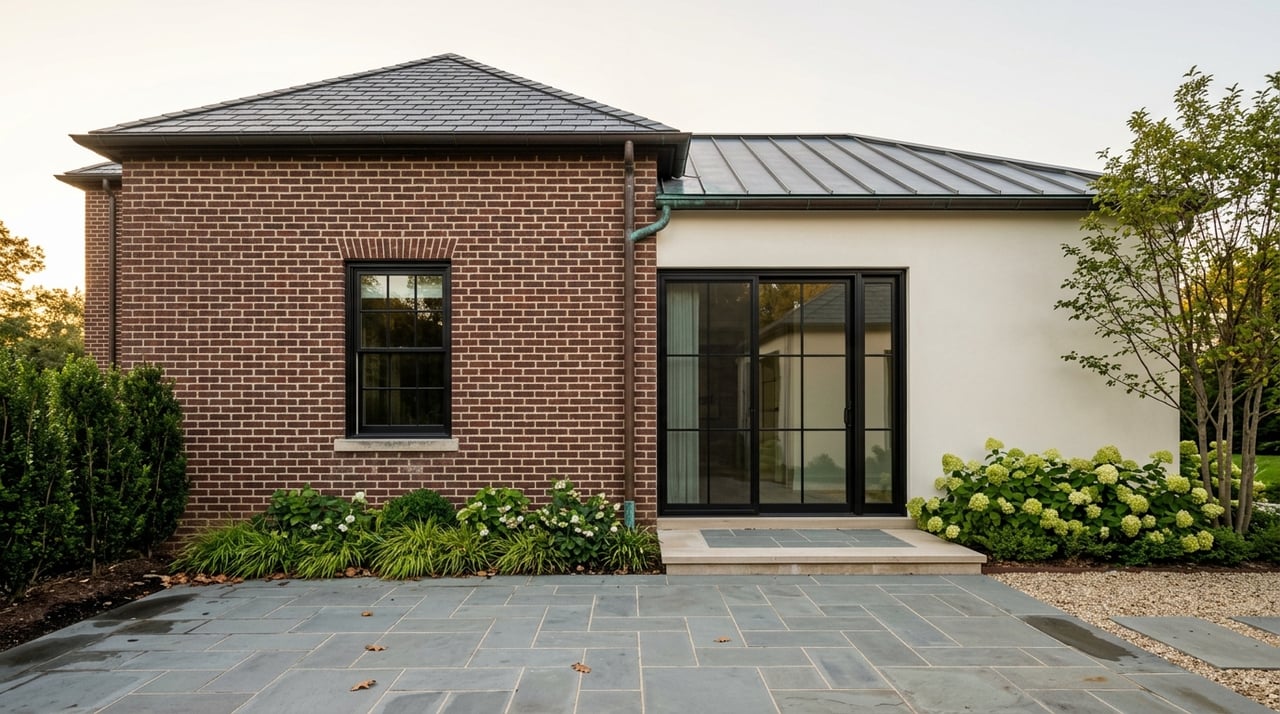
If you are deciding between new construction and a renovated home in Chevy Chase, you are not just comparing finishes. You are weighing architecture, maintenance, energy performance, permitting history, and long-term resale in one of Montgomery County’s most established housing markets. The good news is that once you know what drives value here, the choice becomes much clearer. Let’s dive in.
Why this choice matters in Chevy Chase
Chevy Chase has a long development history that still shapes buyer priorities today. Montgomery Planning describes the area as a community with more than a century of development and notably high standards for landscape and architectural design.
That context matters because homes here are often judged on more than size and condition alone. Buyers regularly weigh how a property fits its lot, streetscape, and architectural setting, especially in older sections of the market.
The local housing stock also helps explain why this decision is so important. In the 2019-2023 ACS data for Chevy Chase, 66.8% of homes were detached single-family residences, 52.7% were built before 1960, and only 0.9% were built in 2020 or later.
In other words, true new construction is rare. That scarcity can make the premium for a newly built home feel justified for some buyers, while others see more upside in a well-renovated older property with strong character.
What new construction offers
In Chevy Chase, new construction is usually a scarcity product. Because so few homes are recently built, buyers often pay a premium for a property that offers current systems, modern layouts, and less near-term maintenance.
That premium is not just about aesthetics. It is often tied to predictability. When you buy new construction, you are typically buying a home with newer roofing, mechanical systems, electrical, plumbing, and building components that may reduce the likelihood of immediate post-closing projects.
Energy performance and efficiency
Efficiency is one of the clearest advantages of newer homes. ENERGY STAR reports that certified new homes and apartments are independently verified and designed to be at least 10% more efficient than homes built to code, while DOE’s Efficient New Homes program can reach 40% to 50% more efficiency than typical new construction.
For you as a buyer, that can translate into better comfort, improved durability, and potentially lower operating costs. In a high-value market like Chevy Chase, that performance story can also support resale.
A simpler early ownership experience
Many buyers choose new construction because they want fewer unknowns. If your priority is a more turn-key move with less immediate repair planning, a newly built home may align better with your lifestyle.
That can be especially appealing if you are relocating, juggling a demanding schedule, or simply want a home that feels current from day one. In a competitive market, clarity can have real value.
What a renovated older home offers
A renovated older home in Chevy Chase offers something new construction often cannot replicate: established architecture, mature lot settings, and a connection to the area’s long design history. For many buyers, that combination is a major part of the appeal.
Older homes also make up the majority of the local inventory. That means if you want to be in Chevy Chase, you are far more likely to encounter renovated homes than truly new ones.
Character can hold value here
Chevy Chase’s planning history supports the idea that architectural fit matters. Montgomery Planning’s historic resources emphasize the area’s architectural ambition and long development arc, which helps explain why well-executed renovations that preserve character can remain highly appealing.
That does not mean every older home is automatically a better investment. It means buyers here often respond strongly to homes that improve livability while respecting the setting, scale, and design language of the property.
Not all renovations are equal
This is where many buyers need to look more closely. A renovated home can range from a mostly cosmetic update to a full systems overhaul, and those are very different products.
The U.S. Department of Energy notes that many older homes have less insulation than homes built today, and windows account for 25% to 30% of residential heating and cooling energy use. A house with new paint, stone counters, and updated lighting may still perform very differently from one with upgraded insulation, windows, HVAC, plumbing, and electrical.
In Chevy Chase, that distinction matters. In a market where much of the housing stock is older and the median owner-occupied value is already high, buyers often place more weight on what was improved behind the walls, not just what looks attractive during a showing.
The real comparison: predictability versus character
For most buyers, this decision comes down to your priorities.
If you value a more predictable ownership experience, new construction often has the edge. You are usually getting a home built to current standards, with fewer immediate maintenance concerns and stronger baseline efficiency.
If you value architecture, established surroundings, and the feel of an older home, a thoughtfully renovated property may offer more of what you want. The key is making sure the renovation quality matches the asking price.
Permits and process can affect value
In Chevy Chase, the difference between new construction and renovation is not only physical. It can also affect how complex the approval and documentation process becomes.
New construction reviews and requirements
Montgomery County requires permits for detached one- and two-family dwellings and townhouses. The county states that code review is targeted within 4 weeks, but WSSC and M-NCPPC also review projects before permit issuance.
New-home construction also requires additional items at application, including right-of-way and sediment-control permits. If a contractor performs the work, that contractor must hold Montgomery County’s New Home Builder’s license.
The Town of Chevy Chase may add another layer for certain projects. New buildings over 500 square feet, main-building demolition, or additions of 500 or more square feet require pre-PAC review, and the town may require a tree-protection plan and a water-drainage application when impervious surface increases by 700 or more square feet.
Historic review can change renovation complexity
For designated historic properties, exterior changes can trigger another review path. Montgomery Planning explains that a Historic Area Work Permit, or HAWP, is required for work such as additions, new construction, demolition, grading, and removal of certain trees, with a review process designed not to exceed 45 days.
At the same time, historic designation does not mean a property is frozen. Montgomery Planning notes that interior work is generally outside HAWP review, and new construction in historic districts can be allowed even when it is not a replica of a historic style.
For you, the practical takeaway is simple: an interior-focused renovation on a non-designated property may be relatively flexible, while exterior work on a designated property can become much more involved.
How to evaluate a renovated home
If you are leaning toward renovation over new construction, documentation is your best friend. In Chevy Chase, a polished finish is not enough on its own.
Focus on these questions:
- What permits were pulled for the work?
- How old are the roof, HVAC, windows, plumbing, and electrical systems?
- Was insulation improved?
- Were exterior changes subject to historic review?
- Is there a record of HAWP compliance, if applicable?
- Was the work structural, cosmetic, or both?
You should also remember that Montgomery County requires utility-bill disclosure in many resale transactions. For owner-occupied single-family homes and individually metered condos, sellers must provide 12 months of utility bills or cost-and-usage history before contract. That can give you useful operating-cost context when comparing an older renovated home to a newer one.
Incentives that may matter
If you are considering a renovation strategy, incentives may play a supporting role. Montgomery County currently offers homeowners up to $250 in energy-efficiency tax credits for certain improvements, and the county notes that utilities also offer rebates and discounts for qualifying energy-related upgrades.
For designated historic properties, preservation incentives may also apply. Montgomery Planning states that Montgomery County offers a property-tax credit for documented exterior maintenance, restoration, or preservation work on designated historic properties, and Maryland offers a 20% state income-tax credit for qualified historic rehabilitation work. Those programs are tied to specific eligibility rules, so they are most relevant when the property and project scope clearly qualify.
Which option makes sense for you?
Here is a practical way to think about it.
Choose new construction if you want:
- Turn-key condition
- Current-code systems
- Reduced near-term maintenance
- Stronger baseline energy performance
- A more predictable early ownership experience
Choose a renovated older home if you want:
- Original architecture and established streetscape character
- Mature lot settings
- The flexibility to benefit from past improvements in an older home
- Potential value in a renovation that preserved design integrity
- A property where documentation supports the quality of the work
The Chevy Chase bottom line
In Chevy Chase, this is rarely a simple newer-versus-older debate. It is really a question of which type of value matters more to you: the predictability and performance of new construction, or the character and setting of an older home that has been renovated well.
Because the local housing stock is older and true new construction is limited, the best decisions usually come from careful due diligence. When you understand the scope of renovation, the permit history, and the way a home fits the broader streetscape, you can make a much more confident choice.
If you are weighing new construction against renovation in Chevy Chase, working with an advisor who understands both product types can make the process far more strategic. For tailored guidance on evaluating value, condition, and resale potential, connect with Lauren Pillsbury.
FAQs
Is new construction rare in Chevy Chase, MD?
- Yes. According to 2019-2023 ACS data for Chevy Chase, only 0.9% of housing units were built in 2020 or later, which helps explain why newly built homes often command a premium.
What should you verify in a renovated Chevy Chase home?
- You should verify permit history, ages of major systems, scope of work, insulation and window upgrades, and whether any exterior changes required historic review or HAWP approval.
Do historic homes in Chevy Chase allow renovations?
- Yes. Interior work is generally outside HAWP review, but exterior changes on designated historic properties typically require review through Montgomery Planning.
Are renovated older homes less efficient than new construction in Chevy Chase?
- Not always. Older homes often start with less insulation and more energy loss, but a comprehensive renovation can narrow the performance gap if it includes systems, insulation, and window improvements.
Do Chevy Chase sellers have to share utility costs with buyers?
- In many resale cases, yes. Montgomery County requires sellers of owner-occupied single-family homes and individually metered condos to provide 12 months of utility bills or cost-and-usage history before contract.
How do you decide between new construction and renovation in Chevy Chase?
- A good framework is to choose new construction if you prioritize predictability, lower near-term maintenance, and efficiency, and choose renovation if you value architecture, lot setting, and documented improvements in an established home.