Are you drawn to Berkley for its quiet, estate-like feel, but unsure what kind of homes actually define the neighborhood? That is a common question, especially in a part of Northwest DC where architecture, lot size, and topography all shape value in a meaningful way. If you are buying, selling, or simply refining your search, understanding Berkley’s housing mix can help you make sharper decisions. Let’s take a closer look.
Berkley’s character starts with the land
Berkley sits in Ward 3, where the DC Office of Planning describes a largely residential setting shaped by early- to mid-20th-century development, large landscaped lots, and extensive tree canopy. The area has long favored detached single-family homes, which gives Berkley a very different feel from DC neighborhoods known for rowhouses.
That context matters because architecture here does not stand alone. A home’s setting, privacy, grading, and usable outdoor space are often just as important as the house itself. In Berkley, lot character is part of the architectural story.
Current market data also supports that premium, low-inventory profile. Homes.com reports a median sale price of $2,975,000, a median year built of 1958, an average single-family home size of 4,143 square feet, and a median lot size of 8,276 square feet. Realtor.com and Zillow report different figures, but all point to the same broad picture: Berkley is a high-value market where homes are limited in supply.
Colonial styles lead the streetscape
If one style sets the visual tone in Berkley, it is the Colonial tradition. Homes.com identifies Colonial Revival and Georgian Revival as part of the neighborhood’s core mix, and current listings reinforce how common these homes are.
Colonial Revival homes in Berkley
Colonial Revival architecture is known for symmetry and order. According to the National Park Service, common features include side-gabled or hipped roofs, centered front entries, fanlights or sidelights, classical detailing, and double-hung windows.
In Berkley, this style often feels especially at home because it pairs well with larger detached lots. The balanced façade and straightforward massing can create a formal look from the street while still allowing for practical interior updates over time.
For buyers, that often means these homes offer a familiar layout and a strong sense of proportion. For sellers, it means presentation matters, because buyers tend to notice whether updates respect the home’s original visual balance.
Georgian Revival homes in Berkley
Georgian Revival homes sit close to the Colonial tradition but usually read as even more formal. They often emphasize symmetry, brick exteriors, and a stately presence that works well on Berkley’s deeper lots.
In a neighborhood where detached homes and generous setbacks are part of the appeal, Georgian Revival houses can feel especially substantial. They tend to offer the kind of curb presence many luxury buyers expect in this part of Northwest DC.
Tudor influence adds variety
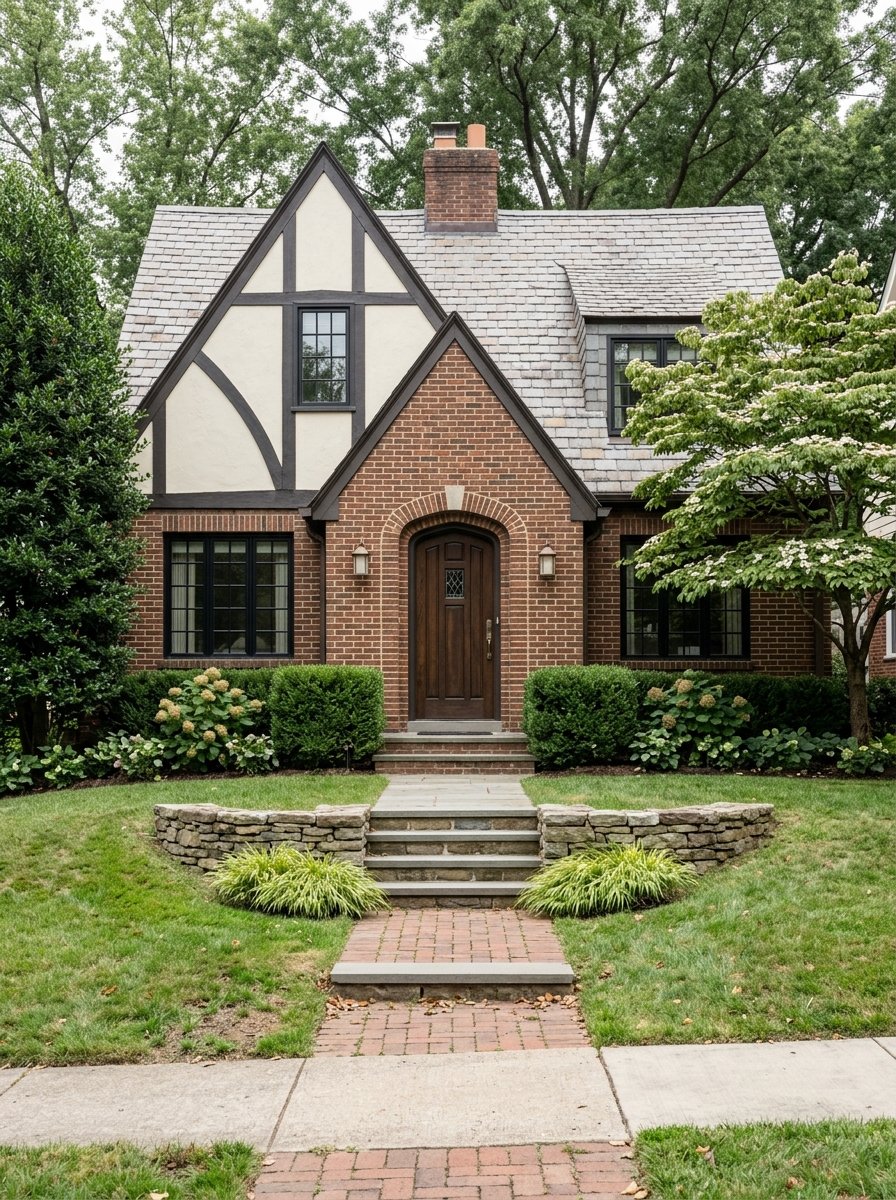
Berkley is not a one-style neighborhood, and that is part of its appeal. Tudor Revival homes also appear in the neighborhood’s housing mix, adding texture and visual contrast to streets otherwise shaped by Colonial forms.
What Tudor Revival homes look like
The Tudor Revival style is typically more asymmetrical and more visually detailed than a Colonial. The National Park Service and DC documentation describe steep roofs, masonry or stucco walls, ornate chimneys, dormers, and leaded or diamond-pane windows as common features.
These homes often feel more picturesque and more material-driven. Where a Colonial may read as orderly and restrained, a Tudor usually makes a stronger architectural statement.
Why Tudor homes feel different to buyers
For some buyers, Tudor homes offer the character they are specifically looking for. The tradeoff is that they can also be more maintenance-sensitive because their roofs, masonry, chimneys, stucco, and detailed windows may require more specialized repair work.
That does not make them less desirable. It simply means the evaluation process should be more detailed, especially when you are comparing a Tudor home with a more straightforward Colonial or a newer custom build.
Contemporary homes are part of Berkley too
One of the most important things to understand about Berkley is that its identity is layered. This is not a neighborhood frozen in one architectural period. Contemporary and newer custom homes are an active part of the market.
Homes.com notes that new construction is typically the most expensive segment in Berkley. Current listings include brand-new homes, which shows that buyers are not only choosing between historic styles, but also between original houses, major renovations, and fully new builds.
What newer homes change in the conversation
Contemporary and newly built homes often appeal to buyers who want open layouts, newer systems, and a more modern design language. DC modernism resources emphasize functionalism and the use of materials such as glass, steel, and concrete.
In Berkley, however, newer does not automatically mean better. Design quality, finish level, and how well the house sits on the lot can have a major effect on long-term value. In a neighborhood with strong land value and established streetscapes, the relationship between the house and the site matters a great deal.
Lot size shapes value in Berkley
In many DC neighborhoods, buyers focus first on interior square footage. In Berkley, the lot itself deserves equal attention.
Ward 3’s planning and heritage materials highlight hilly terrain, wooded valleys, and landscaped lots. Berkley’s reported median lot size of 8,276 square feet supports that broader pattern, and current listings show that lot sizes can stretch much larger, including one-third-acre and half-acre sites in the Foxhall corridor area.
Why topography matters
Because Berkley has more varied terrain than flatter parts of the city, details like grading, driveway placement, yard usability, and siting can affect both daily function and future plans. A home may have a large lot on paper, but the truly usable outdoor space can vary depending on slope and layout.
That is one reason two homes with similar interior square footage may feel very different in value. Privacy, outdoor flow, and how the home is positioned on the site can all influence buyer demand.
Architecture affects renovation potential
Style is not only about looks. In Berkley, it also affects how easily a house can be updated and how that work may be perceived by future buyers.
Colonials and Georgians
Colonial and Georgian homes often adapt well to renovation because of their symmetry and relatively straightforward massing. That can make additions and interior reconfigurations feel more natural when they are thoughtfully executed.
At the same time, exterior changes can quickly alter the home’s character. Front-facing updates, dormers, windows, entry details, and porch design all deserve careful consideration, especially if a property is located in an area where preservation review may apply.
Tudors
Tudor homes are often more visually distinctive, which can make successful updates more complex. Matching masonry, stucco, chimney work, roofing details, and specialty windows may require a more nuanced approach.
For buyers, this usually means renovation budgets should account for exterior character, not just interior finishes. For sellers, well-maintained original elements can be a real asset when marketed correctly.
Contemporary and custom homes
With newer homes, the question is less about preserving historic character and more about evaluating execution. Buyers tend to look closely at materials, floor plan quality, natural light, and whether the architecture feels intentional on the site.
In Berkley’s luxury segment, new construction can command a premium. Still, the strongest pricing usually reflects more than just recency. Buyers are paying attention to design quality and lot utility as much as square footage.
Price differences reflect more than size
Berkley’s current pricing shows how much nuance exists within the neighborhood. Research points to roughly 11 to 12 active listings and median pricing in the high $2 million range, with sale and listing figures varying by source but consistently signaling a premium submarket.
In practical terms, that means a brick Colonial on a generous lot, a Georgian Revival residence, and a brand-new custom home may all sit in the same neighborhood but trade at very different values. Age, originality, renovation quality, and site utility can all influence pricing alongside size.
For buyers, this is where careful comparison matters. For sellers, it is a reminder that positioning a Berkley home well requires more than selecting a price based on square footage alone.
Nearby neighborhoods help sharpen your search
If you are comparing Berkley with nearby options, architecture can be a useful filter.
Foxhall Village for Tudor consistency
Foxhall Village offers one of the clearest contrasts. It is a designated historic district built almost entirely with Tudor Revival rowhouses, along winding lanes and landscaped open spaces.
If you want stronger architectural uniformity and a more preservation-driven setting, Foxhall Village may be worth exploring. If you prefer detached homes and more variety in style and lot form, Berkley is usually the better fit.
Colony Hill and Foxhall Road corridor
Colony Hill and nearby sections west of Foxhall Road are useful comparisons for buyers who like Colonial-style detached homes. Ward 3 planning materials identify Colonial-style development in these areas, which makes them relevant alternatives if you want a similar architectural feel.
Wesley Heights, Kent, and the Palisades
Wesley Heights, Kent, and the Palisades can also help refine your priorities. These neighborhoods share some overlap in price bands or detached-home appeal, but each has a different mix of lot geometry, topography, and architectural character.
That is why home search strategy in this part of DC often works best when you compare not only price and square footage, but also streetscape, land use, and style consistency.
What defines Berkley most
The clearest takeaway is that Berkley is not defined by a single architectural style. Its appeal comes from a layered mix of Colonial and Georgian homes, some Tudor influence, and newer custom construction, all set on larger lots in a hilly, tree-filled part of Northwest DC.
That blend is exactly what makes the neighborhood feel both established and flexible. If you are trying to understand value here, the smartest lens is not just architecture alone. It is architecture plus land, setting, and execution.
If you are considering a move in Berkley or comparing it with nearby Northwest DC neighborhoods, working with an advisor who understands how style, lot character, and positioning influence value can make the process far more precise. To start that conversation, connect with Lauren Pillsbury.
FAQs
What architectural styles are most common in Berkley, DC?
- Berkley is known for a mix of Colonial Revival, Georgian Revival, Tudor Revival, and contemporary or newer custom homes.
What makes Berkley homes different from many other DC homes?
- Berkley stands out for detached single-family homes, larger landscaped lots, and a more estate-like setting than rowhouse-heavy neighborhoods.
Why do lot size and topography matter in Berkley, DC?
- Larger lots, hilly terrain, and site layout can affect privacy, yard usability, driveway placement, and overall property value.
Are Colonial homes in Berkley easier to renovate?
- In many cases, yes. Their symmetry and straightforward massing often make updates easier to integrate, though exterior changes still need to be handled carefully.
Do Tudor homes in Berkley require different maintenance?
- Yes. Tudor homes often include steep roofs, chimneys, masonry or stucco, and detailed windows that can require more specialized upkeep.
Are new construction homes common in Berkley, DC?
- They are part of the market, and research indicates that new construction is often the neighborhood’s most expensive segment.
How does Berkley compare with Foxhall Village?
- Foxhall Village is more uniform and Tudor-focused with rowhouses, while Berkley offers detached homes and greater architectural variety.
What drives home prices in Berkley besides square footage?
- Pricing is often influenced by lot utility, privacy, siting, architectural style, renovation quality, and whether the home is original, updated, or newly built.